
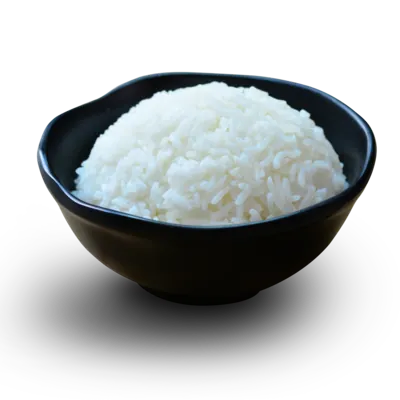
White Rice
Category: Pantry
Serving size: 1 cup cooked (158 g)
Glycemic Index (GI): 73 (high)
Glycemic Load (GL): 28 (high)
Blood Sugar Guide: Avoid
Sodium: Low
Glycemic Index Range Chart (0-100)
White rice GI: 73
Glycemic Load Range Chart (0-40)
White rice GL: 28
Is White Rice Good for Diabetes or Prediabetes?
White rice is generally not the best choice for diabetes or prediabetes when eaten in typical portions. With a glycemic index of 73 and a glycemic load of 28 per serving, it can raise blood sugar quickly and may lead to a larger post-meal glucose response.
If you do eat white rice, keep the portion moderate and pair it with protein, non-starchy vegetables, and healthy fats to help slow carbohydrate absorption. Many people with diabetes or prediabetes do better choosing lower-GI grains such as brown rice, quinoa, barley, or lentils instead.
Blood Sugar-Friendly Food Pairings
Pair white rice with these foods to improve meal balance and help reduce blood sugar spikes:
| Food | Fiber | Protein | Healthy Fat |
|---|---|---|---|
| Lentils or chickpeas | ✓ | ✓ | |
| Grilled chicken or tofu | ✓ | ✓ | |
| Leafy greens | ✓ | ||
| Broccoli or bell peppers | ✓ | ||
| Avocado or nuts | ✓ | ✓ |
Diabetes-Friendly Meal Planning
- Pair it: Eat white rice with protein (fish, chicken, tofu, eggs) and non-starchy vegetables to help reduce blood sugar spikes.
- Portion it: Keep rice to a moderate serving (for example, about 1/2 to 1 cup cooked depending on your meal plan).
- Balance the plate: Try filling half your plate with vegetables, one quarter with protein, and one quarter with rice.
- Swap when possible: For more stable blood sugar, replace part of the rice with lower-GI options like lentils, quinoa, or barley.
Lower GI Alternatives
| Food Item | Serving Size | Glycemic Index | Glycemic Load |
|---|---|---|---|
| Brown rice | 1 cup cooked (195 g) | 68 | 24 |
| Quinoa | 1 cup cooked (185 g) | 53 | 13 |
| Barley | 1 cup cooked (157 g) | 28 | 12 |
| Lentils | 1/2 cup cooked (99 g) | 32 | 5 |
Medical Note
This content is for informational use only and is not medical advice. For personalized guidance, work with your healthcare team.
Report a Data Issue
Glycemic index (GI) and glycemic load (GL) values are compiled from research and nutrition databases. If you notice a potential error, please so we can review and update the information.